Takeaways from Men Who Attend Women-Led Conversations
It’s not an uncommon experience for both women and people of color to experience being the “only” in professional settings: the only female member of the C-Suite or Board, the only black or person of color, the only LGBTQIA- identifying employee, etc. It can be a lonely experience, at any level of a company if you’re the sole member of a group. Moreover, research shows that “onlies” are likelier to experience both subtle and blatant forms of bias.
| What’s a lot less common is for cis-gendered, heterosexual white men–and, yes, I’m calling out that specific demographic in particular–to experience the same thing in professional settings. In fact, data shows that the world has been designed both by and for this demographic of people, so, naturally, conversations around diversity and inclusion are inadvertently targeted to them. |
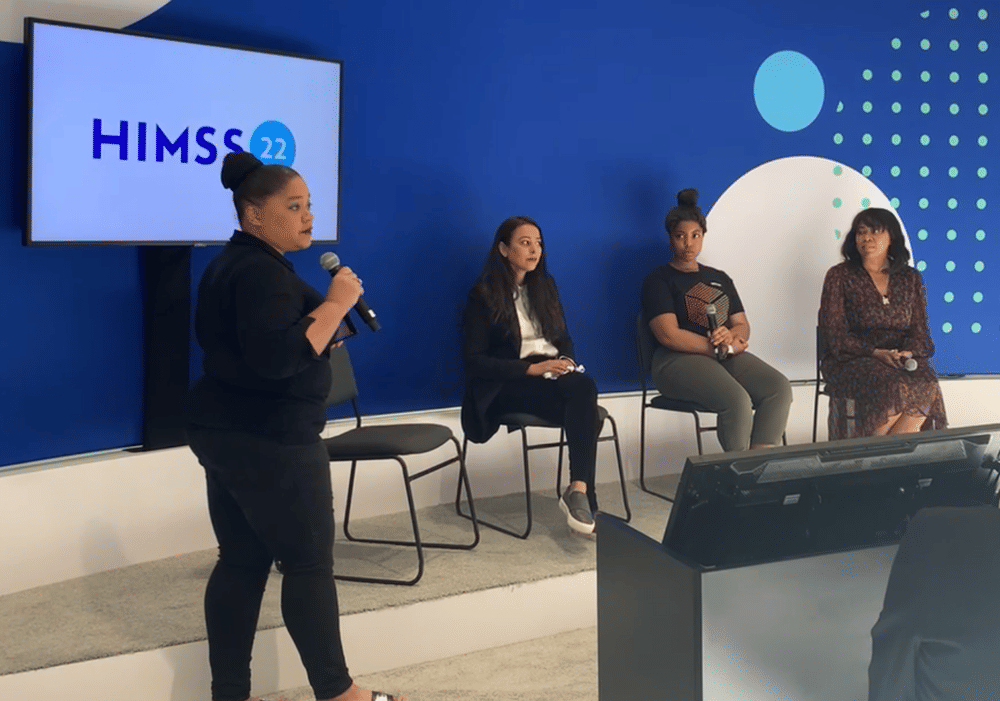
Shereese Maynard, Aashima Gupta, Miona Short, and Fran Ayalasomayajula discuss Diversity, Equity, and Inclusion in Healthcare. *Organized by HIT Like a Girl Pod |
As someone who has kept a keen watch on the status of women at healthcare and health IT conferences over the years, it’s been interesting to witness some subtle shifts in industry culture.
|
Having recently completed the week at HIMSS22, it is clear that more women are being invited to the stage as speakers than in years past. We’ve even witnessed several women-only panels—which is great! However, I’ve noticed that the audience for all-women speakers has also tended to be made up of other women. |
The audience for the #DEI panel discussion |
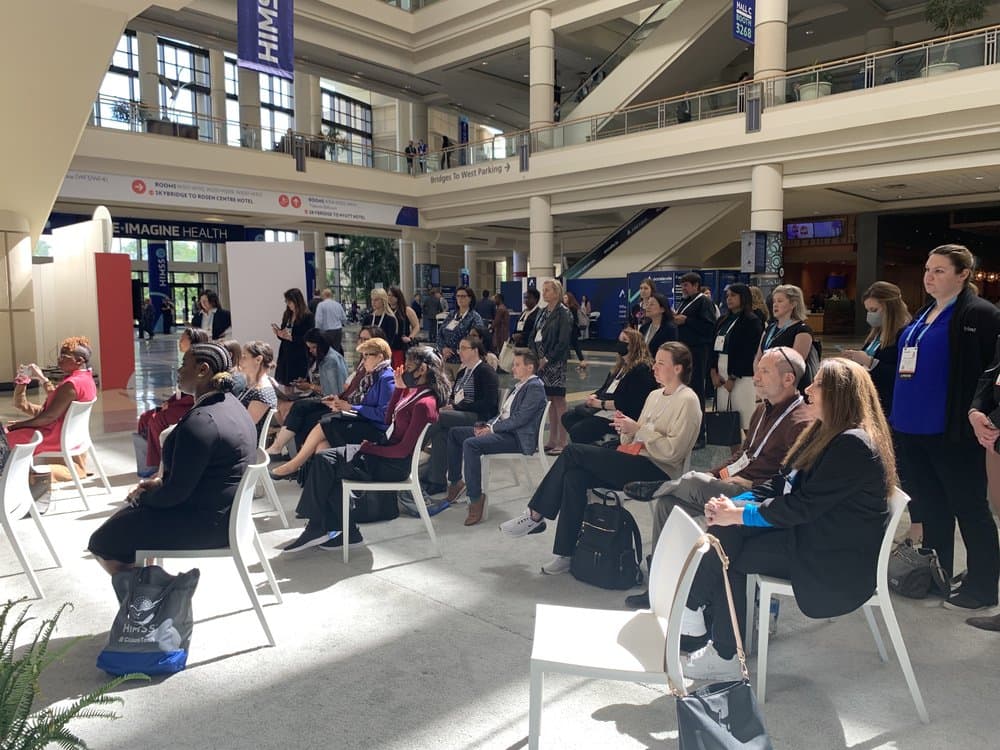
Although the progress for passing the mic to women is very much appreciated, when they are speaking to a largely female audience, it can create the impression that they are “speaking to the choir,” or, alternatively, that the men aren’t listening.
For topics such as diversity, equity, and inclusion—this point matters! It matters because the vast majority of decision-makers in C-level positions in healthcare are held by men and how can we expect them to make choices that incorporate the insights from these important conversations if they’re not listening in the first place?
For the men who put themselves in these rooms, I decided to ask them what it feels like.
One such man was Darron Segall, AVP and Market Access Strategist at Sera Prognostics. He attended the HIMSS session, “Perception vs Reality of Diversity, Equity, and Inclusion (DEI) in Healthcare” and I asked him to share his feedback about being one of the only men in the crowd. He said:
“The session on DEI was the conversation that moved and inspired me the most because it wasn’t just about health equity. It tackled issues across the board… and I had never done this before, but it inspired me to post Live video on LinkedIn to share that conversation with a larger audience.
“To hear [their experiences] in a raw form, it's just so humbling, but it's also inspirational–hearing these women's experience and how absolutely accomplished and brilliant and involved they are in making true change. Not just talking about change, but what they're doing in their careers and professionally to create change, it's inspiring. It makes me want to be involved even more.
“Being a white male, I know that there's all these issues going on, and the outcomes haven't improved much. We need to get a lot better, a lot better.
“We have to fail before we can ultimately be successful, to recognize our full potential. The aura and feeling – I felt part of it, and felt the need to be part of it, if that makes sense. However I can support, spread the word, collaborate with all of the above and more, count me in. It’s an exciting journey.”
I recognize that showing up as an ally can be uncomfortable. It doesn’t come with an instruction manual.
I asked Joe Desiderio, who has been a loud supporter and ally of the HIT Like a Girl Pod community for more than a year if he had any formal training or knew how to be an ally. He responded:
“Absolutely not. I’m just figuring it out. I'm still figuring it out. It's all learn-as-you-go.”
From his perspective, he recognizes that he may not be personally responsible for creating inequitable spaces, and adds, “But I think we all have to figure out how to come together to solve these problems.”
“We're going to screw up and we're going to say or do stupid things as guys. And I think we have to be open to getting criticism, correction, feedback, and women: just give it to us!”
He recommends that more men follow his lead and “just be open. Embrace course correction and stay committed to the whole course.”
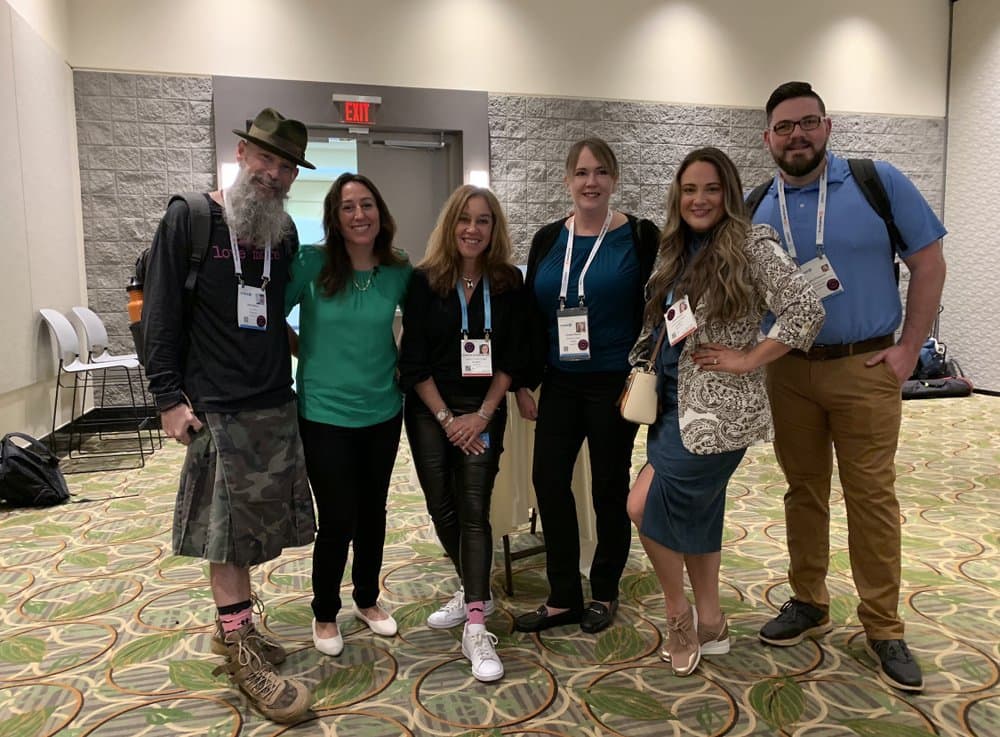
Last, but certainly not least, I had an opportunity to sit down with Nick Adkins, CoFounder of PinkSocks Life, who attended the HIT Like a Girl Pod Coffee Networking Event that kicked off HIMSS week. I asked him if he had any advice on allyship. He got straight to the point.
“I try not to center myself or make anything about me. I find that just showing up makes a difference.”
One thing I know for sure, when men show up for women—when they listen to what we have to say— we are so grateful. To know that they are listening, sharing space, getting comfortable being uncomfortable means the world to us.
And while we love to see women supporting women, if we truly are to have a more inclusive, equitable world, we need to find more ways for women and men to come together to be intentional about driving that change.
Thank you to the men who show up!
Nick Adkins and Dalton Patterson joined the HIT Like a Girl Pod Coffee Networking Event.