
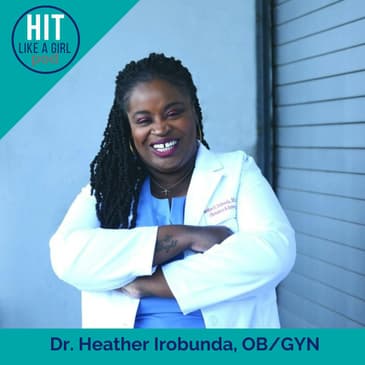

In this episode, OB/GYN physician Heather Irobunda shares her remarkable career journey, from serving in the army to working in private practice and now in public community health in New York City. She discusses the stark differences between these healthcare sectors, shedding light on the challenges faced by marginalized individuals in accessing proper healthcare. Heather emphasizes the critical need for health literacy and education, especially in a society where access to information is constantly evolving. She also highlights the role of technology in democratizing information and the importance of medical advocacy in addressing the gaps in healthcare access and understanding.
[00:00:00] Hello, podcast listeners! Are you ready to advance your career in health care? Then join us at the Women in Medicine Summit, a two-day power-packed event designed to propel you forward. The HIT Like a Girl Pod crew will be there cheering you on at the Drake Hotel in Chicago,
[00:00:16] happening on September 13th and 14th. Get ready for skill-building workshops, inspiring talks, and actionable strategies to help you thrive in your health care journey. Here's the best part. Use code, REFURAL5 at checkout to snag your ticket at a special discount.
[00:00:32] We can't wait to see you network, learn, and grow alongside other amazing women in medicine. Secure your spot now at womeninmedicine-summit.org and enter the code REFURAL5 to unlock your exclusive discount. Welcome to the HIT Like a Girl Pod cast!
[00:00:58] My name is Joy Rios and we kind of talk here about the 30,000 piece puzzle that is health care and it is so complicated and every guest we bring on shares a piece of their expertise. And so I'd like to give you a minute to introduce yourself. Sure.
[00:01:13] I'm Heather Irribunda. I'm an OBGYN physician. I'm based in New York City. I work for New York City Health and Hospitals as just your generalist. OBGYN at a community hospital. Essentially, I've kind of had a really interesting career so far. So I've worked in a variety of spaces.
[00:01:31] I am born and raised in New York but left for college, came back, and then I joined the army to pay for med school. And because I did that, I ended up getting my residency training through the Army at
[00:01:46] Walter Reed and then I was stationed in upstate New York at Fort Drum for about four years where I provided care for soldiers and their dependents. Wow. Yeah. Wow. I'm sure you have a million stories about all aspects. Oh yeah.
[00:02:00] And then I came back down to New York City afterwards and worked in private practice for a little bit. I was in my cup of tea so then I went into like basically public community health and so that's where I am right now.
[00:02:13] So for people who don't know the difference between just private practice and community health, what are the stark differences? Oh yeah. So there's like really kind of a few different spots. So it's like private practice, like the public community health sector and then academic medicine.
[00:02:29] And so private practice is like, I like to think of it like when you were younger and what you thought a doctor should be. It's like you saw it on TV. It's like the guy with the white coat who takes care of your whole family.
[00:02:42] And typically you have a private insurance or something like that or you pay out of pocket and they, you know, and that's who takes care of you, right? And you typically have to have private insurance to be able to see a, you see a doctor
[00:02:57] that has a private practice, but it's like standalone. They usually are affiliated with hospitals that don't have residents or if they do, they may not be involved in your care because it's private, right? Your public or community health stuff is like basically what I would call municipal.
[00:03:15] So that would be the sector of like, let's say you don't have health insurance or you have Medicaid or you're just not sure where to go. We see everybody. And typically it is run by the government. So it could be the city government, state government, federal government.
[00:03:34] And so prices are usually capped or and usually you can get better prices because it's just it's kind of like the generic maybe. I don't know. I don't know. Mostly out of pocket, right? Yeah. Or if they have Medicaid, Medicaid will cover it. They pay out of pocket.
[00:03:52] There's also some charitable grants sometimes for certain types of care. And then your academic stuff, which I think is actually kind of a big deal because there, especially in New York City where I am, because there's so many medical schools, essentially they're
[00:04:08] affiliated with a university and a medical school. And so there's a lot of medical training that happens there. You can have medical training in private hospitals or institutions or even in public ones, but primarily like your academic practices or your academic hospitals are where all of that's from.
[00:04:26] So that's where you see the residents and the medical students. And then you have the like attending clinicians who are like teaching them all and taking care of you too. And some of them are very, very good. And that's where a lot of research is developed.
[00:04:40] OK, I want to talk more about the community side of things because I think you have access to a lot of the problems that when we talk about statistics and what's going on in the country, I imagine you're at the forefront.
[00:04:51] Oh, yes, because I think that we see an interesting cross section of people. And I think oftentimes it's we see people who don't have the best access. So I think we see like the marginalized folks, right?
[00:05:07] So it's like if you don't know how to access medical care, right? You don't know who to ask. You don't know who to talk to. We're probably the people you end up going to because we're the most accessible. Additionally, for those who require Medicaid,
[00:05:20] who tend to not have employment or some sort of way to acquire private health care or private insurance, I should say. I feel like we see those patients because we take that insurance, right? And so you get to see people with a variety of different means.
[00:05:37] And oftentimes we see a lot of the challenges that people face getting health care. Well, some of the big problems and challenges that we talk about is getting the right information to the right people at the right time
[00:05:49] in a way that they can actually understand it and take it in. And I imagine you're in a situation where you are that person. And like, how is it that you get people information that they need? Also, what kind of questions are they asking you
[00:06:03] and what level of access do you feel that like they could use that they don't have? That all of that is a lot. Oh, yeah. So one of the biggest things that I always wish for my patients
[00:06:16] is that I was able to give them time to go to like school to learn about their bodies. Like, I wish that there was some way that it could be either something that they get paid to do or that they didn't have to worry about,
[00:06:32] you know, losing time from work or their kids or school or whatever the case may be. But to learn the basics about their body in a way that they can understand because one of the big things that happens, right, is most people come to see
[00:06:46] someone like me, a doctor when they're sick or when there's a problem. In this country, you don't do a great job at preventative care. We don't. Right. And so the problem is, is that I am seeing someone who
[00:06:59] missed all of those times that we could have maybe done some education about their body, their menstrual cycle, their uterus, their external genitalia, all of that stuff. I haven't had the opportunity to do that. And now they're coming to me with a problem and I have to explain
[00:07:14] that problem to them when they don't understand the context. This is a huge problem. And this is what I continually have to try to do in like 15 minutes. What I do to try to remedy some of that is some of the work that I do online
[00:07:29] so or accessing good resources for that. So like, if I don't have something that I've made that I think is helpful, then I'll try to use some something else that I found. But trying to give patients information in the literacy level
[00:07:45] that they operate and the health literacy, because the thing about it is that I liken it to this. So my mom was a teacher, right? And my mom, I think, is the best. But I think she's also one of them, like very intelligent, right?
[00:07:58] I think she is capable of understanding a lot of things. Medicine is not her forte. OK. Anything related to that is not her she's not great at it. So she can understand the words, but she may not understand the condition. She may not understand like the physiology.
[00:08:15] She may not understand those things. So when you're talking to her, she's like, huh, yep. And then when I go to talk to her after and I'm like, so you went to the doctor and what happened? She can't really tell you because she didn't understand, right?
[00:08:29] And many people are like that, especially if they're not medical. So it's like finding out a way, literacy wise, health literacy wise to also communicate with patients, not just the words, but like, you know, not just literacy, but like health literacy.
[00:08:44] That seems to be a bigger problem where I mean, education is a major issue around the country in different state by state. Oh, yeah. Think about what we're giving people access to of information or taking away.
[00:08:56] I feel like we've taken away a lot of information that could be really useful and helpful for people to actually understand their bodies. Oh, yes, especially lately, lately around this country, we like the little bit that we had were taking away because that's actually something
[00:09:11] that I think is really poignant, right? Because I think that there was a problem with health literacy before a lot of these initiatives around the country to limit like sex ed or health ed or whatnot.
[00:09:24] And there was already a deficit there and now we're just making it worse. And it's putting the responsibility on that to medical providers who are already strapped for time and then also even our like ancillary staff, right? Because you know, we do have some health educators and stuff.
[00:09:41] But when those jobs, especially in community settings, are not well paid, right? And in New York City, where I live, it is expensive. And like people can do that job for a while while they're usually looking for another job that's going to pay more.
[00:09:55] And so we don't have consistency in those types of roles. And so and then we have a ton of people who they need to see. So you're asking our health, you know, even our ancillary staff,
[00:10:06] our nurses, our health educators and stuff like that to kind of beef up what we're able to do in the office as doctors, but we're not giving them the tools for success. And so even though we have these initiatives, sometimes they're
[00:10:19] not as helpful as we would like them to. I mean, I think about a lot of the challenges that we just face as a society and a lot of it has to do with access to information in the right setting, in the right format at the right time.
[00:10:32] And we're withholding. Exactly. And I think too, that's why I think tech is definitely very important to all of this, because as I say, it democratizes information. Yeah, you have it in your phone. Like, as I said, like the things that I've done online,
[00:10:49] like the information that I've created, the topics that I've discussed. I've been sitting in my one bedroom apartment in New York City, making this stuff, right? I didn't have to go to a studio. I didn't have to, you know, I didn't have to do all of these things.
[00:11:04] And then it's beamed out to however many tens, hundreds, thousands, millions, whatever, it's beamed out to all of these people. And now this allows more people to access it for good or for bad. Right. So, like, you know,
[00:11:18] you would hope that people who are giving good information are able to do that stuff. But unfortunately, sometimes that's not always the case either. Well, so you were talking and I'll share for our listeners, we're here at the Women in Medicine Summit. Yes. One of the speakers.
[00:11:32] And I wanted, I was really moved by the medical advocacy that you do. Yeah. And so I'd like to, I'd like to give you an opportunity to talk about how that has sort of shifted your life and what does medical advocacy mean to you
[00:11:45] in all of these different ways, whether it's online or in person. Honestly, medical advocacy is something that I never thought I would be doing, to be honest. But I think it was born out of need, right?
[00:11:58] So going into work and seeing even when I was not just in New York and not just in the Bronx, but elsewhere, seeing folks who didn't understand their bodies were dealing with like really like messed up medical issues. And there were so many other factors affecting it.
[00:12:18] I was like, there has to be something we can do here. And what I saw in terms of kind of traditional medical presence or advocacy or whatnot, wasn't something that I felt would be suitable for the issues I'm dealing with with my patients.
[00:12:35] Right? So basically I'm from the Bronx and I have had my own lived experience, right? So I've had times when I couldn't afford healthy foods. I've had times when I couldn't know. There were times when I didn't have health care, like when I didn't have
[00:12:51] health insurance, I feel like a lot of people in this country, you know, you're in between jobs, like things happen, right? And so when I talk to my patients who have dealt with the same types of
[00:13:01] things, I get it and I'm like, but there has to be a better way. We can't like we try to figure out how to kind of work around it, but we have to figure out who can help us make there be a better way.
[00:13:12] And so that's kind of how I got into advocating for things. And then I saw that some of the most effective communicators are online, right? Are on social media. And so I was like, well, if they can use it for that, then I can use it for this.
[00:13:26] And maybe one person listens to me or more than that. But that's kind of where I went to with that. And then what's interesting is that when you talk about certain things, you may get the attention of folks who can help, right?
[00:13:39] And so something that's been really kind of fortuitous and great is that I've been able to reach some of those folks who I've wanted to reach. Like government officials, the White House, things like that, where it's like talking about things like Black maternal health
[00:13:55] or abortion care, reproductive health care, food desert, social determinants of health, I've been able to have those conversations in those rooms and have a seat at that table, which I mean, I didn't think that me as a girl from the Bronx who literally, as I said,
[00:14:10] I take the subway to work. I live in my little tiny apartment that I love and I work in a community hospital. Like we don't have the newest, most updated stuff. But I'm able to talk to folks about the experiences of my patients
[00:14:25] and the experiences of delivering health care in that way. And it's powerful and it's the story behind the data. Exactly. And I think that's important because I think like in school, when we all get a ton of information thrown at us, data, we're like,
[00:14:46] oh, you know, great, like the world is burning. Cool. Like move on. But when you hear someone say, hey, I have not been able to afford to get fresh fruits and vegetables. I have not had access to that.
[00:14:59] And so and the same thing is happening to my patients. So we're telling them to eat healthy foods and we don't have it for them. What are you going to do about that? Right. And then you give them data. Well, my question is cool.
[00:15:12] Where I live in Baja California. Oh, I have insight into a population that, of course, is lacking in a lot of ways. Yeah. Like not as much access to health care or technology or to foods or whatnot.
[00:15:25] And so I feel an affinity for what you experience and what you get insight into. Because sometimes I think that in our world of going to conferences and seeing all of the new innovations, we think that technology is the answer to everything. Yeah.
[00:15:40] And that's not necessarily the case. I agree. And so that's actually something that I find to be really important. And then I feel like I'm being like, I don't want to sound like the person who's like anti progress and anti tech because I actually
[00:15:53] love tech. But I'm telling you, my patients do not have connectivity to their phone as much as people would think. Right. My patients phone numbers like change all the time because their phone gets shut off. They get a new phone, things of that nature.
[00:16:10] Data. Do they have data for their phone? Wi-Fi. Do they have Wi-Fi? Most of my patients don't have Wi-Fi in their homes. It's actually an initiative that we're doing in New York to get Wi-Fi for all because like it's so important, especially
[00:16:26] it was becoming an issue during the pandemic because students who were supposed to be doing school from home needed connections to the Internet and they're and they don't have it. They gave them the laptops, but they don't have Wi-Fi. So what are they going to do?
[00:16:42] And then just access to even just shelter. Yeah. And a roof over your head. People don't realize how many like folks are unhoused, like especially younger, younger folks, especially the ones that I see where it's like, OK, I'm not getting along with my mom and I'm like 19.
[00:17:00] So I'm moving out and I'm living on my friend's couch for a while. But then I can't stay here for more than three weeks. So then I'm moving to my other friend's couch. That's being homeless and people don't realize that.
[00:17:10] So when it comes time to accessing health care and needing to find out what pharmacy to send their medications to or whatnot, they might be on another side like in New York, on another side of the of the city, which takes two hours to get to.
[00:17:28] And now I'm presenting a difficulty for them to get their medications, right? Or like I said, I'm going to send you a message through the electronic medical record and your phone shut off. Not helpful. Not helpful. Anything to them either. Right.
[00:17:43] So it kind of exactly messed up in both directions. We have a conversation I've been having, which I would love your insight on is the maternal deserts where like in places where there is no access to education or resources. I've heard people say that the solution is telemedicine
[00:18:03] and then we get into our same problem. Hey, yeah, yeah, I would love to hear your. Oh, I have thoughts because actually this is something that hits close to me because when I was in the military, I was stationed pretty remotely.
[00:18:16] And obviously I worked at the hospital that you could get obstetric care. But we had people who would come maybe an hour sometimes further to get that care. OK. And so if they had an acute issue, the closest hospital to them could not care for them.
[00:18:33] And unfortunately, one thing I was told when I started working up there was like accept that they're going to be you're going to see things that could have been prevented outcomes, poor outcomes, just based off of distance that the patient couldn't get there in time
[00:18:47] for a better outcome. And so when it comes to routine prenatal care, of course, telemedicine can be helpful if people have the technology to do it and access to the technology to do it. But when it comes to the actual rendering of care,
[00:19:05] like you're in person needing to because we got to like touch the patient to do it, to like help them like, you know, birth their baby, things like that. In order to do that, you have to have physical like hospitals and stuff.
[00:19:20] And that's just something that is already an issue. And it's only getting worse because they're yeah, because they're closing them down. Well, so that's I mean, I don't expect you to have the answers to all of it. But I'm like, we have to do something.
[00:19:31] There's so much. Oh, yeah. To do. And it's just it's like where it's an uphill battle where like the rocks keep getting heavier. Oh, yeah. Because one of the big issues I had when I was up where I was, right,
[00:19:43] was that, OK, we could take our hospital could take care issues up to a certain complexity level. And then there was the more advanced actually with an academic institution in Syracuse that was an hour away from me. And this is in Blizzard country, right?
[00:19:58] This is upstate New York. Like we are limited by weather sometimes you sometimes you can't get a helicopter up out to where we need to go and then working on roads that haven't been plowed yet. So an hour long trip now becomes longer and more treacherous, right?
[00:20:14] And so I remember one of the ways that they were trying to mitigate some of this stuff was trying to, OK, identify people who are higher risk earlier, who are going to need these services earlier and then park them down in these, you know, higher risk places, right?
[00:20:30] So like, for example, instead of staying in Watertown, New York, where I was, like if I knew somebody was particularly high risk, maybe starting from like their 36th week or 34th week or whatever, we're putting them down in Syracuse. But that is a huge deal.
[00:20:44] OK, like what if you work? OK, and what if you don't work a job that you're going to get paid even though you don't go? Right? Like you don't have what if you don't have like vacation time or FMLA
[00:20:57] or like whatever with the population that we're talking about? They don't. Right. So you're telling them, oh, you have to like prioritize your health. So I don't care if you can't pay your bills. I don't care if you need to figure it out.
[00:21:11] You need to be down here or you or your baby could have a bad outcome. And that is not fair, right? But then it's like, what is the other part of this? Right? I think some of it also comes to education, right?
[00:21:23] So one of the big things I see, right, is like buy into some of these communities with the maternal deserts, like of the community of like having folks who want to go into medicine or into medical careers.
[00:21:35] You may not have as much as you need, but you may need to start trying because the issue is that a lot of these areas are trying to recruit outward. Right? So if you're in medicine or in the medical field,
[00:21:49] you will always be getting phone calls from these remote areas trying to recruit you to go there because they can't find anyone in the area to do this work. Right? I think what we need to start doing and it's a long game.
[00:22:00] It's not going to be like a tomorrow thing, but it's something that we need to really be thinking about, talking to the folks who live in these areas about being able to sustain their communities and how important that is.
[00:22:14] Right? Because the thing about it is that like when you're recruiting out, those people, if they stay, they stay for a few months, a year, two years and what not. And then you're in the same position and it's another desert again.
[00:22:28] I just think about, well, I'm going to go to Zombie Apocalypse Lane where you just have to have like your everybody has a different skill set. Yes. And you compliment each other. Yes. Something about taking community care and. Oh, yes. Oh, yes.
[00:22:42] OK, you've got Bill the post office guy, but he's also works at the hardware store and is a police man. Oh, yeah, it's funny that you say that because I was actually having a conversation with someone from Europe, right?
[00:22:52] And it's very interesting because everybody talks about kind of like European health care and how like, you know, there's a lot of socialized health care and there's a lot of things that are very, very great about it. And then they complain and I'm like, have you been here?
[00:23:04] Have you been? Have you? Have you experienced? It was actually not even health care related this discussion. It was about schooling, right? So in the States, right, we're always like pushing everybody should go kind of down these certain paths, right?
[00:23:17] Everybody needs to go to college or everybody needs to do this and what not, right? In some parts of Europe, they don't do that. They're like, hey, like some people are going to be firefighters and some people are going to be, you know, nurses and some people.
[00:23:30] Yeah, some people are going to be farmers and some people are going to be helping running our stores and stuff like that. And they are more balanced even in how they counsel or talk to like kids in high school where it's like I feel like we're always
[00:23:45] telling everybody to be the best, whatever the best is in that situation. And so you end up getting everybody funneled into certain things. And then like we need people to do other things as well. So I thought it was very interesting because I was actually against it
[00:23:59] when I first heard it. And then when I thought about it more, I was like, that actually makes sense for a functioning society because we kind of need people to do all different types of things. I feel like this is a conversation that we could have all day.
[00:24:10] I also think I like the idea of offering nuance to like what people's future is. You don't have to have just one path and that's the only way. Right. Nothing about any of this is black and white. It is all nuanced. Oh, yes.
[00:24:24] Thank you for sharing your insight and your expertise with us. Oh, of course. People want to follow you or learn from you. Oh, yes. I'm primarily on Instagram, but I do TikTok as well. Dr. Heather Irwibuna MD on both platforms.
[00:24:38] I'm on Twitter kind of ex. What is it? I don't even know what we're doing. It's Irwibuna MD on Twitter. And then yeah, those are my main things you can find me hanging out. Would you experience your own content as like more educational or entertainment?
[00:24:55] Do you add in comedy? I'm all over the place. Yeah, I'm me. So I have educational things, right? And I feel like I go through phases. So like I have phases of like super educational stuff, which is fun. Then there's like my then and it's edutainment.
[00:25:11] I always try to make the educational stuff fun. But I also have a lot of discussions about just like social things. I do that. And I don't I related a lot to medicine and health and that sort of stuff. But I'm also humans.
[00:25:25] And I feel like that's important. And I think that people need to realize that docs are also part of your community and docs can have opinions about what's happening in the community that has nothing to do with health care. Yeah, but most things do.
[00:25:41] Well, thank you so much for your advocacy and for your presence. Oh, thank you. Yeah, thank you so much. Thanks for listening. You can learn more about us or this guest by going to our website
[00:25:53] or visiting us on any of the socials with the handle hit like a girl pod. Thanks again. See you soon again. Thank you so much for listening to the hit like a girl podcast. I am truly grateful for you.
[00:26:05] And I'm wondering if you could do me a quick favor. Would you be willing to follow or subscribe to this podcast or maybe leave us a rating or review? Or if you're feeling extra generous, would you share this episode on your Instagram stories or with a friend?
[00:26:17] All those things help us podcasters out so much. I'm the show's host Joy Rios and I'll see you next time.